So, I’m not exactly sure what law(s) the Minister of Housing and Local Government broke – other than pissing PAS off, which last I checked isn’t a crime – but I’m sure the country’s foremost political animal in religious clothing will conjur some obscurantism to justify their favorite pasttime.
As for the 69 reports filed against Hannah Yeoh, I guess it took PAS over 10 years to reach page 7 where the phrase “ambassador of God” (the book was published in 2014); I have witnessed many toddlers read faster than that, which begs the question what mental age PAS collectively has.
All told, despite the rapid industrialization these past few decades, I guess Malaysia is still an agrarian society, with all the rage farming going on. Unfortunate though that rage farming doesn’t offer any positive economic returns… because we sure have a lot of it these days.
So yeah, if anyone has ever wondered why PDRM can’t solve actual and real crimes more than they do, one of the probable reasons is they’re obligated to unnecessarily spend resources to process the multitude of police reports made over the most idiotic of reasons. Malaysians, it would seem, have forgotten the art of intelligent human engagement – you know, like normal human beings in most other parts of the world.
And then, as if the first week and a half of 2025 didn’t already have enough stupidity, we have this whole big brouhaha over the “Addendum Order” by the previous YDPA, in relation to the Pardons Board hearing to address Najib Razak’s sentence for his conviction in the SRC criminal breach of trust (CBT) and power abuse case. For which he was sentenced to 12 years in prison and a fine of RM 210 M (USD 46.6 M at current rates).
To quickly summarize (this AP report has more details): the Pardons Board on 29 January 2024 issued an order to halve Najib’s sentence, pursuant to the Board meeting on the Friday prior (26 January), chaired by the then YDPA (the current Sultan of Pahang). But not long after that Najib claims there was an Addendum Order granting him to serve the remainder of his sentence under house arrest. The Home Ministry, however, stated only the primary order was received by the Prisons Department, but not the so-called Addendum Order.
Fast forward through almost a year of political posturing and finger-pointing, participated by none other than UMNO–the primary actor, which has made the full pardon of their former president their raison d’être–and more recently Perikatan Nasional, jumping on the hot potato bandwagon, for the purpose of milking every drop of political mileage they can.
What the Court of Appeal this past Monday, 6 January 2025 ruled: that there is such an Addendum Order (or at least the Pahang palace’s affidavit that one exists), giving leave for Najib to further pursue this in the High Court. Note, however, that the actual addendum order was never submitted to the Court of Appeal, only an affidavit from the Pahang palace affirming its existence.
A tsunami’s worth of questions arise in my mind:
If there was an Addendum Order (which the Appeals Court has now ruled into being), why wasn’t it mentioned in the official order by the Pardons Board?
When was the Addendum Order issued, and to whom was it addressed to and sent?
Is the Addendum Order even legally valid?
Questions, questions, questions… well, it’s up to the High Court to decide, and some point for the actual Addendum Order to appear. We’ll just have to wait for the next episode in this ongoing political telenovela. That said, I did come across one article that discusses the constitutional and legal aspects of the Addendum Order (an article written by advocate/solicitor GK Ganesan); I leave it to you to read as a homework exercise.
The one silver lining to all this is the government, in particular PMX, has refrained from any undue interference. Many of course don’t buy this, wanting to believe that PMX is pulling strings left, right and centre, hence using him as a focal blame point for, among other things, “hiding the Addendum Order”, and even treason. But as the GK Ganesan article rightly states, there needs to be more transparency on the part of the Government.
The minutes of the Pardons Board would answer the question. We do not have it. The Government should disclose this information. This will eliminate unnecessary speculation.
It is not an ‘official secret’ (and why should it be?). It has nothing to do with national security. Nor is it related to political manoeuvring – or so we are told. In the interest of transparency, there is all the more reason that such information should come before the public.
In any case, that more or less sums the year so far.
Drama. Of Indonesian Sinetron levels, no less.
Sure there were a few other things that happened in the past nine or so days. But what I’ve shared here are the highlights. Or, if you must, lowlights.
Oh, wait… an ADDENDUM: And this time it’s once again about Malaysia’s favorite agrarian activity: RAGE FARMING (click on the image to view the news report)
And that’s not even touching on the absurdities the incoming POTUS has been spewing the last few days. Which, for the sake of not making this post longer than it already is, I shall leave untouched. For now.
On a more personal note, the year’s been okay to me so far. Then again, it’s only been less than a fortnight. While 2025 doesn’t exactly fill me with much optimism, whatever the year throws at me must be met with positivity; make the best of what’s good, and mitigate the damage of what’s bad. That’s my plan.
So…
an Addendum walks into a bar. Orders a drink. And then another, and another after that… At closing time the barman asks the Addendum to settle the evening’s consumption. Addendum points to its right and says, “Put it on their tab”.
And who should be sitting there if not the people of Malaysia…
Walski’s Note: This is Part II of the third article by guest writer Mikhail Hafiz (follow him at @IMMikhailHafiz on X), a young Malaysian who writes eloquently on nationhood and his thoughts about how Malaysia can progressively move forward. Since this blog has been resuscitated from its deep slumber, I figured it would be a good idea to post more of Mikhail’s writings. This essay is part of Mikhail’s Rediscovering Malaysia series of articles, which he ultimately would like to publish in book form, sometime in the near future. This essay was originally posted as a thread on X, and is presented here with the express permission of the author, and is presented as-is, save some formatting edits.
While it is impossible for our aspiring architect leaders to prepare themselves fully for their roles, they can (and should), with the correct values, attitudes and courage, take on the responsibilities of political stewardship, despite encountering these formidable challenges:
“Old Guards vs Young Turks” Predicament
Will the older generation of leaders be willing to mentor their protégés and relinquish their positions to their successors, so that the latter are given the opportunity to hone their leadership skills?
In other words, will the Old Guards look favourably upon the challenge of incumbency mounted by the Young Turks? Or will they regard their charges sceptically, insisting that the latter are too inexperienced, too rash and too eager to change the world overnight?
As the world continues to evolve and each successive generation ushers in new regional and international political developments, these leaders should be given the opportunity to prove their worth and map out their idiosyncratic, innovative and unorthodox leadership styles, within the constraints imposed by the two pillars of our parliamentary democracy: rule of law and constitutional supremacy.
These perceived political “enfants terribles” should not be seen as a threat to their predecessors, or as disruptive forces in our country.
Perhaps the singular determinant of success or failure in this specific area of leadership is the ability to adopt an attitude of healthy confidence in governance and public engagement, as opposed to one of odious arrogance, and to not conflate the former with the latter.
Where confidence is quiet, focused and contained, arrogance is loud, brash and attention seeking.
As such, studied sprezzatura, no matter how hard it tries, will never possess the seamless stylishness, effortless nonchalance and unforced élan of its authentic, aspirational benchmark.
“Progressive vs Regressive Politics” Paradigm
Will tomorrow’s leaders be able to wean themselves – and the citizenry – from identity politics and resist the temptation to indulge in personality politics, in order to fully embrace inclusionary and reformist politics?
Will they be able to prise Malaysians who are addicted to the fear and grievances being peddled by ethnoreligious tribalists away from rampant racial and religious polarisation?
Will they also be able to free Malaysians who are caught in the clutches of a cult-like adoration of their political counterparts from unquestioning acquiescence and unconditional loyalty to the subjects of their idol and idle worship?
As I have previously opined, in my second article of this series, titled ‘O Bangsa Malaysia, Wherefore Art Thou?‘, which addresses the contentious and perplexing issue of national identity:
“[E]thnocentrism, as an ideology for modern nation building, [is incongruous with Malaysian nationalism, as it] effectively dismisses the inherent and prevailing inter-cultural hybridity and cosmopolitanism of our country … and the South East Asian region …”
In contrast, personality politics develops the conceptual link between persona and power by promoting and showcasing the political leader as a messianic figure.
This elaborate and insidious exercise in illusion is achieved through the employment of a bifurcative stratagem:
1) extolling his many virtues, in order to persuade and convince the target audience – often with additional assist from religious overtones – that this remarkable individual is (apparently) infallible and thus, an indispensable champion and protector of the people; and 2) selectively highlighting the inadequacies and ineptness of his adversaries, in order to perpetrate (and perpetuate) the narrative of an inferior challenger.
While it is ostensibly viewed as the less detrimental ideology, political cultism is as debilitating to the psychological, emotional and philosophical development of a nation, as its regressive counterpart.
As learned educator, scholar and political analyst Bridget Welsh elucidates: “Malaysians see governance by focusing on leaders, putting them on pedestals when they perform and pillorying them when they fail to meet expectations.“
“Lenses are tainted by a history of divisive politics that often forgives unforgivable acts of abuse, and excuses poor performance.“ (source: A Way Forward for Malaysia)
For far too long, Malaysians have demonstrated an overzealous fixation on political personalities and dynasties, instead of focusing on the policies their parties offer.
It is time to supplant a superficial mindset with a substantive outlook.
By clinging stubbornly to identity and personality politics, which are exclusionary and divisive in nature, and no longer serve their purposes in an ethnically plural, religiously diverse and inherently multicultural polity, Malaysia comes across, ideologically and politically, as an antiquated artefact, a relic of the past, instead of serving as an inspirational beacon of meritocracy, equality and justice for one and all, as she continues to be outpaced by, and lag behind, her regional neighbours.
“Certificate of Fairness vs Authoritarian or Mercenary Populism” Conundrum
Can our future leaders demonstrate impartiality by bringing what former Attorney General Tommy Thomas describes as a “Certificate of Fairness” to their decision making process, as former Deputy Prime Minister Tun Dr Ismail Abdul Rahman (widely regarded as “the best Prime Minister Malaysia never had”) did several decades ago?
Or will they, conversely, resort to authoritarian populism, which has saddled Malaysia with the unflattering, uncharitable and undesirable twin monikers of “competitive authoritarian system” and “guided democracy”?
There is also the distinct possibility that they may succumb to mercenary populism, which is characterised by opportunistic political skulduggery and anodyne lip service.
This disingenuous display of fawning, obsequious servitude frequently manifests itself in vacillating stances on salient and emotive issues, and crowd pleasing sound bytes, with the latter often accompanied by ingratiating expressions of appeasement and gratitude.
It is a fate that has, unfortunately yet unsurprisingly, befallen faux centrists and pseudo progressives from both sides of the political divide, in their individual pursuit of political expediency and personal gain.
Also, should any of our future leaders find themselves embroiled in political coups, controversy and corruption, will they be able to free themselves from continually spiralling down the vortex of moral depletion?
More importantly, will they possess the impetus to do so, especially if they appear to have divested themselves of their moral compasses, instead of merely misplacing these “cumbersome appliances”, which would otherwise broadcast reminders of their moral ineptitude at an alarming frequency?
This is where the prized human attribute of self awareness comes into play.
Without self awareness, there is no self reflection.
Without self reflection, there is no self examination.
Without self examination, there is no self correction.
Without self correction, there is no self development.
Coming to terms with ourselves means coming to terms with our responsibilities, our actions and their consequences.
A conscientious leader constantly examines himself, acknowledges his limitations, and continues to learn and improve.
Bennis, widely regarded as a pioneer in the contemporary field of leadership studies, cautions that “[t]he most dangerous leadership myth is that leaders are born – that there is a genetic factor to leadership”, asserting instead that “[l]eaders are made rather than born.“
It is a viewpoint that receives strong support from legendary sports coach Vince Lombardi (1913-1970): “Leaders aren’t born, they are made. And they are made just like anything else, through hard work. And that’s the price we’ll have to pay to achieve that goal, or any goal.“
Leadership is not only a challenge to be surmounted, but also a responsibility to be shouldered. The success or failure of a leader therefore depends on whether his shoulders are, metaphorically speaking, wide and sturdy enough to bear this sizeable burden.
It is only when our leaders have acquired the requisite expertise and experience that they are able to propagate the kind of statesmanship needed to propel our nation to greater heights.
To paraphrase a popular and well known idiom by one Mohandas Karamchand Gandhi (1869-1948), Malaysia’s future depends on what her leaders do today.
So, do we look to the future with guarded optimism or abject despondency?
How one views the current state of Malaysian political leadership will depend on whether one subscribes to the notion that the glass is always half full, or whether one strongly believes that the glass is perennially half empty.
Eternal optimists will attest to the existence of potential leaders in every generation by referencing statesmen who have (sadly) taken their rightful places in the scintillating constellation of dearly departed political giants, while perpetual pessimists will insist that we are slowly being submerged in the quicksand of dire straits and sinking into political obsolescence and oblivion.
It would not be unreasonable to suggest that the reality lies somewhere in the middle of these two extremes, as evidenced by a coterie of capable politicians whose vocational trajectories appear to be stymied by the lack of leadership opportunities.
Regardless of the obstacles faced by our leaders, it is increasingly infeasible to ignore the tidal wave of individual and collective voices coming from the younger demographic, who are calling for sweeping changes to our stultifying political quagmire.
Understandably, this clarion call for much needed and long awaited institutional, systemic, electoral and procedural reform carries considerable political heft, and deservedly so.
According to an announcement by the Election Commission on 14 January 2022, 1.2 million voters between the ages of 18 and 20 will be able to exercise their democratic right at the ballot box for the first time in the next general election.
This groundbreaking electoral and political development is a result of bipartisan support for the historic amendment to Article 119 of our Federal Constitution (Qualification of electors) that lowers the voting age from 21 to 18 years old.
Thomas Fann, Chairman of the Coalition for Clean and Fair Elections (Bersih 2.0), has projected that “18- to 40-year-olds would make up 12.2 million or 58 per cent of the total electorate if an election is held in the middle of next year.“
He further opines: “Young voters will be the kingmakers in the future elections. Whichever party or coalition that aspires to rule the country must appeal to this group. Ignoring them would be political suicide.“ (Source: Channelnews Asia)
Youth voters are not only clamouring for reforms, but also for a new generation of leaders to spearhead our country, in the face of mounting cynicism, anger, frustration and exasperation at the incumbent political elites due to their diabolically incompetent governance.
In an incisive and insightful article chronicling the turbulent past year in Malaysian politics, erudite political anthropologist Sophie Lemiere perceptively concludes:
“As the politicking continues and the political culture remains entrenched, recent years have shown that, more than ever, Malaysia’s political scene needs to bid farewell to its titans and allow a new generation to rise.“ (source: Center for Strategic & International Studies)
While a leader may not necessarily shoulder the responsibility of political stewardship for life, he should always be in the service of life.
As Welsh eloquently espouses: “Public service as opposed to personal servicing needs to be centre stage. Care needs to be taken to show the public that efforts are in their interests, not those of the elites.“ (source: Malaysiakini)
Her astute observation echoes the gold standard of vocational professionalism that is memorialised in the timeless words of the late P. Patto (1947-1995), Malaysia’s very own Exceptional Everyman, and one of our nation’s most distinguished statesmen: “The choice by the electorates in any election or by-election must be held in high esteem and not treated as a licence to trade one’s position as a Member of Parliament or State Assemblyman for personal gains and clarifications.“
When the time comes for the mantle of leadership to be handed over to the next generation, our future leaders must remember that they owe their leadership to those who have elected them into positions of power and authority.
They must not just promise. They must also deliver.
Our leaders must truly serve their people with vision, drive and commitment.
If we do not ascend to the peak of a mountain, we will not comprehend the highness of the heavens.
If we do not descend to the basin of a valley, we will not countenance the depths of the earth.
If we do not bear witness to the profound words handed down by the ancient wise men, we will not understand the greatness of life.
Leadership is a learning process.
The youth of today have to learn how to be exemplary leaders of tomorrow.
DEDICATION: To Kasthuri Patto (@PattoKasthuri on X): It is my personal opinion that no treatise which comprehensively examines the topic of Malaysian political leadership is complete without a reference to your late father’s uncompromising integrity, indefatigable efforts and indomitable spirit.
His words of wisdom, which I have included in this article (towards the end of Part II), resonate as clearly and unequivocally today as they did 37 years ago, when they were read and heard for the very first time.
Walski’s Note: This is the third article by guest writer Mikhail Hafiz (follow him at @IMMikhailHafiz on X), a young Malaysian who writes eloquently on nationhood and his thoughts about how Malaysia can progressively move forward. Since this blog has been resuscitated from its deep slumber, I figured it would be a good idea to post more of Mikhail’s writings. This essay is part of Mikhail’s Rediscovering Malaysia series of articles, which he ultimately would like to publish in book form, sometime in the near future. This essay was originally posted as a thread on X, and is presented here with the express permission of the author, and is presented as-is, save some formatting edits.
Leadership is the capacity to translate vision into reality.
Warren Gamaliel Bennis (1925-2014)
(Standfirst: Malaysia’s leadership crisis has come to resemble the Twilight Zone: an arid, desolate nowhere land where the modest expectation of leadership by example meets the harsh reality of leadership by absentia. The solution to this imbroglio lies in the future generation.)
[NOTE: In Part I, I delineate a holistic approach for the cultivation of advantageous and covetable leadership values, identify the five different types of leaders in the international political firmament, and argue for the necessity of architect leaders in our country.
In Part II, I develop the substantive chronological connection between youth and leadership by examining the challenges faced by the younger generation in equipping themselves with the expertise and experience to successfully shoulder the burden of political stewardship.]
A little caterpillar hatches from its eggshell and grows until it reaches its full size. It then spins itself a cocoon. In this chrysalis stage, it undergoes great changes. The metamorphosis complete, a beautiful butterfly emerges, ready to explore the world.
Similarly, a child born into this world grows and advances into the stage of youth, a period of significant development, and matures into adulthood to take his place as a leader in society.
And what better place for our future leaders to start their training than at home. If their parents and siblings, their first teachers, exemplify love, tolerance and respect towards one another, then they can also acquire these positive values.
It is, however, the years spent at school, totalling more than a decade, that are the most formative and impressionable years of their lives. In the classroom, they learn to ask questions, solve problems, come to logical conclusions and make the right decisions.
Outside the classroom, they are presented with the opportunity to develop their team-building, communicative and leadership skills through extra-curricular and sporting activities. They are, so to speak, in the chrysalis stage.
As these individuals progress from adolescence to adulthood, they continue to cultivate commendatory values and develop their leadership skills, whether they opt for tertiary education, choose to pursue a technical or vocational qualification, enrol in an apprenticeship programme, accept a position of gainful employment in a commercial enterprise or not-for-profit organisation, or explore their entrepreneurship abilities by setting up their own businesses.
Charity work and voluntary participation in political organisations also provide our prospective and fledgling leaders with the opportunity to inculcate laudatory values and habits, and master new leadership skills.
Just as it takes an entire proverbial village to raise a child, it is the “whole of society” approach that is, to a significant extent, responsible for the emergence of intelligent, empowered and virtuous leaders.
Also, just as it is the strong and resilient butterfly that survives in the polluted environment, it is the leader with unassailable rectitude who demonstrates fortitude of character to rise above moral depravity, by imbibing a multitude of noble and prized human attributes.
And what might these advantageous and covetable leadership values be?
These are the qualities I would look for in a leader.
If we define “integrity” as “telling myself the truth”, and “honesty” as “telling the truth to others”, as American physician and writer Spencer Johnson (1938-2017) has done, then it is imperative that a leader not only acknowledges verifiable truths (ie, truths that are substantiated by statistical evidence and factual statements) but also communicates these truths to others, without engaging in intentional misrepresentation and premeditated manipulation.
Should he fail to do so, the erosion of trust that consequently follows, from within his own political cabal (colleagues, subordinates, coalition partners) and without (fellow legislators, citizenry, regional counterparts, international community) will inevitably lead to a respect deficit, which eventually results in a lack of cooperation and legitimacy issues.
Humility is also a great asset to a leader. It is never easy to be humble and it is even more difficult for those who lack personal foresight and worldly experience to practice humility.
We do not like to be criticised. We do not like to be told we are wrong. We do not like to have our faults pointed out. However, we must realise that constructive criticism is dispensed by those who possess clarity and insight with our best interests at heart.
After all, some of the most valuable lessons and arcane truths are derived from acknowledging our errors and examining our mistakes. It is part and parcel of what humanity has come to regard as the learning process.
Despite the substantial influence of the political elite and the indelible impact of their decisions in determining the trajectory of a nation, it is somewhat surprising to discover that there is a scarcity of academic literature devoted to the study of political leadership.
As established academic and prolific columnist Benjamin Laker notes: “Leadership literature comprises thousands of works – hundreds of which are typologies that categorize leaders in ways to explain their actions.“
“But very few examine political leadership. And given the rise of populist parties and alternative facts, advancing understanding of actions taken by politicians is crucial.“ (from Benjamin Laker’s article published at Forbes.com)
In 2020, the application of a typology developed by the Harvard Business Review to the political industry resulted in the identification of five types of leaders that populate our global political landscape: surgeon, soldier, accountant, philosopher and architect.
For purposes related to the discussion of the issues examined in this essay, a compact yet comprehensive description of each type of political leader, as articulated by Laker, follows –
Surgeon leader: decisive and incisive; focuses on delivering short term impact via targeted troubleshooting (ie, identification and prioritisation of critical stress points); transformation is temporary as the entity is heavily reliant upon the leader himself.
Soldier leader: focuses on maintaining order and increasing efficiency by trimming and tightening resources, and concentrating on the bottom line with an insatiable tenacity; fixation on operational details however drives a culture and climate of fear and uncertainty.
Accountant leader: comparatively moderate and resourceful; opposes austerity politics and operates systematically, focusing on economic growth; often described as creative financiers; economic performance usually increases during their tenure and after their departure.
Philosopher leader: a passionate debater who enjoys discussing the merits of contesting approaches; often guided by principles driven by dogma; inspiring to those who share a prevailing ideology while marginalising to detractors, thus creating an echo chamber.
What Malaysia desperately needs, in such troubled, troubling and trying times, is architect leaders: insightful and visionary individuals who “focus on redesigning and transforming to build long-term sustainable impact.”
Architect leaders possess the best attributes of the other four types of leaders. They also, according to Laker, “exemplify the concept of Servant Leadership – an interconnected series of principles coined by Robert Greenleaf in 1977 that focuses on stewardship.”
And what could be more pertinent in the representative democracy that is Malaysia than the principle of political stewardship, especially when some of our incumbent politicians have come to regard their elected positions as a birthright, legacy or entitlement?
While the tenure of an architect leader usually produces steady performance improvement, he is often vilified by those who gravitate towards immediate impact and short term gratification, precisely because of his commitment to long term sustainability.
However, it is humbly submitted that such nearsighted individuals, who tend to prioritise short term benefits over long term gains, fail to consider and appreciate the intrinsic truth encapsulated in the following words of wisdom by former American president Theodore Roosevelt Jr (1858-1919): “This country will not permanently be a good place for any of us to live in unless we make it a reasonably good place for all of us to live in.“
DEDICATION: To Kasthuri Patto (@PattoKasthuri on X): It is my personal opinion that no treatise which comprehensively examines the topic of Malaysian political leadership is complete without a reference to your late father’s uncompromising integrity, indefatigable efforts and indomitable spirit.
His words of wisdom, which I have included in this article (towards the end of Part II), resonate as clearly and unequivocally today as they did 37 years ago, when they were read and heard for the very first time.
Douglas Adams, The Hitchhiker’s Guide To The Galaxy
Two things: first, an apology for not posting for so damned long; the last posting was in April… of last year… Like, seriously?!?. The second, and arguably the more important thing, is that Walski has made the decision to stop writing in the third person (except for this sentence).
Yeah, it’s tiring, truth be told, and somehow puts me in the same league as those entertainment gossip columnists in Malaysian media we so love to loathe. So there… as I – and Walski before me – break with tradition. Again.
I could go into all kinds of reasons why – mostly made up – I haven’t updated this blog in such a long time, but quite simply it’s because 2024 has been a busy year for me in the real world. As you may or may not know, I co-run an art business and since it’s now a nomad gallery, travelling has been a big part of running said business.
These days Walski shuttles back and forth snugly hibernating in my suitcase between KL and Manila, and only gets the opportunity to leave the confines of baggage and breathe some fresh air whenever something ire-inducing pops up on X/Twitter (and other social media outlets).
Which arguably is becoming more often than I like it to be these days.
Domestically, the primary source of ire is how a coalition I had put my trust in to introduce positive reform has instead been mostly regressive in their 2+ years in office. Making matters worse is an opposition block that, to put politely, has been not much more useful than a zoo full of morons (except for a few monkeys).
I won’t go into a blow-by-blow account of how disappointing the PH-led government has been, or the legislations they’ve pushed through that are more problematic than they are helpful or progressive. To be fair, the PH-led “unity government” has achieved some positive milestones, like the model of government itself for one, and the abolishment of the mandatory death sentence, to name another.
Personally, I see that the achievements made thus far are few compared to the amendments to, and applications, of restrictive laws, in some cases make them more vague and more open to abuse; the most recent example being amendments to the Communications and Multimedia Act that were rushed through the house despite calls from all and sundry for it to be sent to a Parliamentary Select Committee for scrutiny. Oh, and the amendments also give MCMC almost unrestricted powers. Hurrah for freedom to shut the fuck up, or else…
But why has PH, which ran on a promise of broad institutional reforms and freedoms, turned retrograde and regressive? IMHO the answer lies in the elephant-sized albatross that’s also part of the “unity government”, better known as UMNO and the handful of hangers-on that form the rest of BN. PH couldn’t have formed a government if not for this unity arrangement, which I’ve mentioned on X/Twitter sometime back is far from ideal. But here we are. And it is what it is for now.
And don’t even get me started on the MIB (Malaysian Islamic Bureaucracy) and its tentacled network of affiliates (both private and public sectors)… But I will mention one discomforting initiative on their part: the proposed F.T. Mufti Bill.
Internationally, the world seems pretty messed up these days. Gaza, Syria, Ukraine, and the FUBAR attempt at martial law in South Korea… just to name a few recent global events. Topping off the global shit-cake is, of course, the orange-tainted cherry of Trump 2.0.
So yeah, loads and loads to bitch and moan about, but so little bandwidth…
I am hesitant to make any promises that this post will mark a comeback to posting more regularly. Time and again things in the real world have come up causing me to go on hiatus and Time being the elusive animal it is, refuses to tell in advance.
But we’ll see… where there’s a will, there’s a way; and a horde of relatives fighting for the deceased’s estate…
Hasta la later, sports fans… unless you’re a Manchester United fan, then it’ll probably be much, much la later… 🤣
All talk on Islamic States is just an empty dream. No man in his right sense would accept a nation which bases its political administration on religion, and in a country like Malaysia with its multi-racial and multi-religious people, there is no room for an Islamic State.
Tunku Abdul Rahman, First Prime Minister of Malaysia
First off, Happy New Year 2023 to everyone!
2022 was an interesting year, for several reasons. Not least among them was the 15th General Elections on November 19th, resulting in a hung parliament but eventually returning Malaysia’s governance to Pakatan Harapan, spearheading a coalition government – or Unity Government, as it’s officially being called – which includes BN, something that very few would have expected.
But such is politics, and the strange bedfellows it makes. What will be interesting to see is if the negative narratives against DAP, a key component of PH, can be countered with BN being a part of the government. Why? Simply because UMNO was where the demonization of DAP began, a stratagem now taken up with gusto by Perikatan Nasional (PN), primarily comprising Bersatu (an UMNO offshoot) and Islamist party PAS (another UMNO offshoot, historically).
There are many challenges that the Unity Government faces, as the Malaysia it has inherited isn’t exactly one that was well managed post-Sheraton Move back in 2020. Thus far, the assurance given is that the primary focus for the present will be the economy and helping Malaysians tackle an ever escalating cost of living.
A month plus in, the government has so far been doing just that. But as we’re all too familiar with, band-aids may help in the short term, but what Malaysia needs moving forward are well thought out policies in all areas of governance and life. It’s early days still, and how the government fares will be something every Malaysian will be paying close attention to in 2023 and beyond.
There are a few things that Walski would personally like to see happen this year. Frankly, it’s a long wishlist, so he’ll just mention a few in this post.
One of the things that has suffered greatly in recent times is personal liberty, and the freedom to be. Overall, Malaysia has slowly but surely become more conservative, primarily due to religion being increasingly forced upon contemporary Malaysian society. And the push for “Islam” to be the base consideration for everything, affecting everyone regardless of creed, even if the ‘official’ spiel is that it will only affect Muslims. So does that mean a religious apartheid with heightened Muslim-policing best case, or worst case, a comprehensive religious police state?
That Walski has written “Islam” (in quotes) is by no accident – what he’s referring to is a very narrow officially sanctioned interpretation of a tenet that ironically has a long and rich history of divergent viewpoints and interpretations. And this officially sanctioned “Islam”, too, has (d)evolved over the years, a lot more puritanical today compared to a few decades ago.
For instance, every time we approach a non-Islamic religious, or even non-Malay cultural celebration sometimes, without fail injunctions on wishing well those who celebrate will magically emerge on social media. And this year, also without fail, emerged a lovely Christmas prohibition message, from none other than Malaysia’s favorite dissident religious persona non grata, Zakir Naik.
The 2022 edition of Zakir Naik’s divisive Christmas prohibition message…
Granted the Facebook posting this image was sourced from has since been taken down, how did this kind of divisive messaging become so commonplace in multicultural, multireligious Malaysia? The quick answer, from Walski’s POV: over-empowerment given to the religious right to push their ideologies into almost every aspect of life in this country, under the guise of Ketuanan Islam (Islamic Primacy/Supremacy), which is, in effect the new Ketuanan Melayu.
And it is upon this new reality that Perikatan Nasional made much gains during the recent GE15, support for PAS being the main contributor of votes, building upon GE14 momentum, and almost resulting in PN taking the reins of power (which, thankfully, didn’t happen).
What comes with an inordinate amount of religion in the public sphere? Quite simply ANYTHING that doesn’t jive with the Islamist establishment is suppressed and/or outright banned. Worse, anything found to be “insulting to ‘Islam'” (as defined by these Islamists, as and when and how they please) will land folks into hot soup. We saw this happen for real in 2022, by the way. Case in point: what happened to Rizal van Geyzel.
Walski’s hope is that we see no more of this similar Islamist-influenced BULLCRAP. And not just for 2023 either. Because the joke that Rizal van Geyzel made was something based on a FACT that didn’t sit well with trigger-happy Islamists: racial discrimination in favor of Malays/Bumiputera. And by some strange magical linkage that only an Malay Islamist could appreciate, this translated to an “insult to Islam”. Yeah, go figure.
Related to this is Walski’s ardent wish that Islamists should no longer be allowed to dictate public policy exclusively. Sure, their opinions may be sought – and since we’re still a democracy, should be heard – and if these opinions are constructive they may very well be adopted, but not to the extent of blanket yes/no based on their opinions alone. Malaysian Islamists (maybe any Islamist) tend to be prohibitionist by nature and action. If they don’t like something, then NOBODY can like that something.
Here’s a current example: the Ministry of Health is embarking on a pilot project to provide PrEP (Pre-Exposure Prophylaxis) to prevent the spread of HIV, targeting people deemed to be most at risk, which includes intravenous drug users and sexually active male homosexuals. It’s no surprise that our Malaysian Islamists (i.e., ISMA et al) are campaigning against it, on the grounds that it will “promote homosexual activities”.
Screenshot from an article posted on Samudera.my, a news portal likely linked to ISMA
Instead, not unlike their Christian far-right counterparts in the US,, they promote Abstinence. Perhaps they should read research that has found abstinence-only strategies to not be effective. Or perhaps they’re aware but simply don’t care because it goes against their so-called beliefs, and so continue to promote what they believe to be the only acceptable way. Again, very much like their US-based Christian far-right counterparts.
Be that as it may, their opinions alone shouldn’t be the benchmark to create and implement public policies. And that’s another one of Walski’s hopes for the nation, this year moving forward.
Will the current PH-led government be able to last a complete term, or will it once again implode under the weight of political sabotage? There are many opinions about this, and quite frankly, at this stage, many of these opinions are mere speculations. After all, the government has only been in place for a mere month and a half, and for the most part is only now really getting down to business.
One thing, however, is clear: the Anwar-led Unity Government needs to deliver to a population that generally wants a better Malaysia, and after a fairly lackluster almost two years, wants that better Malaysia sooner rather than later. At the same time, however, Walski believes there is a real need to temper hopes and/or expectations, and to not expect the impossible.
At the year’s end, there is promise and potential for change, but cynicism and fear of disappointment reduce expectations and dampen hope. Not least of all is the reality that old forces remain in political power, despite the overwhelming call for change.
As Peter Parker’s Uncle Ben once never said, “with lower expectations come fewer disappointments”.
Walski would ideally want to see Malaysia change for the better in all areas, but he realizes that changes to a “business as usual” governmental machinery cannot be achieved overnight. Even if those changes are for the better, because that’s just the nature of governments and bureaucracies – lots of inertia and lots of resistance to change. Sure, there are political pitches, promises, and all that, but never forget that animal called realpolitik. And overcoming that beast takes time.
The hands that work these bureaucracies, lest we forget, are real, living, breathing human beings. And we all know, despite putting up a façade to indicate otherwise, the operative thoughts will be, to varying degrees, “how will I be affected by all this change?”.
But Walski is hopeful that this time around, the PH-led unity government can and will deliver. The only question is how much and how soon. Walski is of the opinion that the government needs sufficient time and room to produce results, and not succumb to pressures to rush things heedlessly.
And in some areas, if Walski may remind you, effects of changes will only materialize after a period of years, and not weeks or months. Realistic change is not fast food, or pizzas that appear at your doorstep in 30 minutes or less (or your money back).
And if any politician tries to convince you otherwise, they’re lying. And if you actually believe said politicians, you’re a bigger fool.
So bottom line, fellow Malaysians, we will need to exercise some patience on our part as well. At the risk of sounding like a broken record: change takes time. More importantly we need to observe what are the steps being taken to exact that change we so desperately want? Personally, as long as things are moving in the right direction, Walski is happy.
Perhaps the one good thing (and maybe only one) about growing older is that one learns how things really work in this world. Well, Walski has, at least. And with that knowing is the realization that a lot of things take time. Just like the cliché about building Rome.
These aren’t the only hopes Walski has for 2023, of course, but let’s just say they sufficiently encapsulate the gist of things on his mind.
To close, on a more personal note, there is the question of New Year resolutions. And while some people’s resolutions are currently at 4k, Walski’s remains at full 1080 HD. A bit behind the curve, perhaps, but certainly clear enough to see what’s what, who’s who, and… where is that damned pizza he ordered an hour ago?
Kidding aside, though, Walski hopes to write more this year. And for this blog to not be neglected like it was in 2022. And in order to write more – which also means needing to read more – Walski needs to manage his time better. So yeah, that would be the other resolution he has for this year: better time management.
Apart from writing for work (i.e. his real-world business), as you may or may not know, Walski also writes – 280 characters (or less) a pop – on Twitter. Yeah, yeah… he’s sticking around despite the mess Mr. Musk has made. So if you think Walski’s slacking off updating myAsylum, please remind him – nay, bug the heck outta him – on that bird app.
In the meantime, enjoy your Monday off, and once again, Happy New Year 2023!
“The first ten million years were the worst,” said Marvin, “and the second ten million years, they were the worst too. The third ten million years I didn’t enjoy at all. After that I went into a bit of a decline.”
Marvin, the paranoid android in The Restaurant at the End of the Universe by Douglas Adams
Scrolling through the various social media platforms, in particular Facebook and Twitter, Walski has observed a heightened level of despondency in today’s Malaysia.
And this feeling seems rooted in two areas: politics and religion. Also economics, but in Walski’s opinion the root cause in politics. More specifically, the obsession among our politicians to further politics over policy.
If once upon a time there was a push for Malaysia, Inc., the reality we’ve arrived at today is Despondency, Inc. And it honestly doesn’t look like it’s going to get any better anytime soon.
What the Malaysia, Inc. initiative – basically a situation of cooperation between public and private sectors for the advancement of the nation – turned out to become consolidation of wealth for the oligarchs in this country, and the creation of a GLC-controlled economy.
The 1980/90 period saw the start of a quasi-Thatcheresque privatization of government services, but with the government still very much involved in business. It was those with ties to the parties within government that benefited most (and continue to).
The other side effect of mega GLCs: crowding out of the market, creating barriers for ground-up businesses to flourish, and because of lopsided “policies” (to use the term loosely), those that really wanted to grow could only do so by relocating elsewhere. The most recent case: Grab, that relocated down south and is now a Singapore-based company.
The complete answer, like all answers to simple question, is undoubtedly complex, and would require several posts to answer in sufficient detail. But for Walski, the bottom line is three things: lack of vision, lack of agile policy, and the fact Malaysia continues to be mired in identity politics.
And all three, at the end of the day, boils down to politics.
Perhaps an oversimplification and pretty crude, but it wouldn’t be unfathomable if one of the root-cause factors leading to Grab’s relocation is that the owners are of the “wrong demographic“.
Closely tied to the quagmire of Malaysian politics is religion, a source of political power for the major players in our political environment, which by and large still believes religious/ethnocentric concerns are the key priority. In the meantime, the rest of the world moves according to REALITY. Even those political parties whose existence isn’t grounded in this antiquated notion ultimately get dragged down into the bottomless shithole pit.
Because if they don’t play ball, the big political players and their legion of fucked up retard minions will start their campaign of mudslinging. Islam Über Alles… that sort of thing. Fascist? You betcha!
Today, race and religion have become all too intertwined. Religion has become the new “race”, and religion has become a blunt tool to exert perceived social and moral superiority. It’s a convenient tool to demand compliance of those with the audacity to think rationally and question when there’s a need to.
And if all else fails, invoke Article 3 of the Federal Constitution, regardless of how irrelevant it is to the argument. Or police reports, the favorite pastime of these mofo minions.
Religious authorities are regarded as sacrosanct, beyond reproach, and any criticism will be met with vociferous ire and blood-curdling threats of retaliation. Regardless of the sometimes overreaching and unreasonable these so-called religious institutions have become, these are the new sacred cows that can never be questioned. And who comes to the rescue when there is valid criticism voiced out?
The same damned mudslingers, and other minions of the countless religious NGOs that have mushroomed over the last decade, like fauna on fresh rain-watered dung. If there is one thing that will sink this nation down to the deepest pits of Hell on Earth, it will be our increasingly incessant obsession with invoking religion at every damned turn, and forcing it to be relevant over the most minute of concerns.
So if you wonder why Walski senses great despondency within the social media sphere, these are the two root-cause reasons. From his perspective, and his alone, naturally. And yes, he too is despondent. Very much so.
Oh, and by the way, Selamat Hari Raya Aidil Fitri.
For all it’s worth…
Photo credit
The feature image used for this post is a screenshot from a video short called Suicidal Clown, via Alexandru Cotoc on YouTube (full image below).
The title pretty much describes what Walski thinks about Malaysia today: idiotically clownish, and just waiting to implode and self-destruct. But hey, as long as we’re “moral” and performatively pious, right?
Walski’s Note: While this is the second contribution by Mikhail Hafiz (follow him at @IMMikhailHafiz on Twitter) as guest writer, the article was his first for his ongoing Twitter-based Rediscovering Malaysia series of writings (and who knows, eventually a book?). It was published in two parts, but as the article isn’t exceedingly long, Walski has republished it here in a single post (you may find the original postings here: Part I & Part II). As Walski considers this young man one of the more noteworthy individuals he’s had the privilege to get to know on Twitter, for his eloquent delivery of ideas for the betterment of Malaysia, Walski considers it important that more folks get to read Mikhail’s writing in a more flow-friendly, longform format. And Walski is more than honored that Mikhail has consented for myAsylum to host this essay, as a guest writer. Kindly note that Mikhail’s preferred mode of English spelling is the British/UK variety, and as such this has been retained.
[Standfirst: From a personal perspective, education endows us with the ability to distinguish true from false, and right from wrong, thus facilitating the decision making process.]
PART I
Reflecting on the current state of political affairs both locally and abroad, I am reminded of the following quote by Hannah Arendt, one of the most important political thinkers of the 20th century, from her seminal 1951 magnum opus ‘The Origins of Totalitarianism‘:
“The ideal subject of totalitarian rule is not the convinced Nazi or the convinced Communist, but people for whom the distinction between fact and fiction (ie, the reality of experience) and the distinction between true and false (ie, the standards of thought) no longer exist.”
These words are as prescient, potent, pertinent and profound today as they were sixty years ago, when the world struggled to rebuild itself, in the aftermath of the destruction, damage and despair of catastrophic proportions inflicted by Adolf Hitler, as a consequence of his notoriously unhinged megalomaniac aspirations and demented obsession with ethnocentric tribalism, which, unfortunately and tragically, found a receptive and enthusiastic audience in a weary and despondent German population.
As de facto power holders in a Westminster political system, we must remain vigilant against any attempts to pervert the course of our parliamentary democracy, by ensuring that the twin pillars of the rule of law and constitutional supremacy continue to be upheld at all times.
We can also make every effort to ascertain the veracity of the information we acquire and receive, to ensure that we do not inadvertently mislead, misguide or misinform ourselves and others.
The following informal rule of thumb, which counsels caution and circumspection in the absence of certainty or the lack of opportunity to seek confirmation, can be applied to most pragmatic issues: “If in doubt, do without.“
Over the last two decades, exponential advances in electronic innovations and end user software have brought citizens of the world much closer than could have ever been previously imagined. This globalisation of interaction and socialisation, which has in turn enhanced the democratisation of communication and knowledge, has been powered by the advent and proliferation of international social media platforms like Facebook, Twitter and Instagram.
As we become increasingly connected, perhaps it would not hurt for us to inculcate [cultivate] an appreciation for education, and to foster a healthy respect for knowledge,in terms of its inherent value and the power of discernment conferred upon its possessor.
Once considered the exclusive, upper class privilege of the political, social and financial elite, education can be regarded as a modem day necessity, with many entry level jobs now requiring some form of academic or vocational qualification.
Not only does quality education serve as an effective antidote against authoritarianism, it also galvanises social mobility in post-colonial and post-feudal societies, and plays a pivotal role in nation building and conflict management.
In the context of personal development, “education” can be defined as the acquisition of cognitive, analytical, problem solving and communicative skills that enables an individual to exercise independent, informed, logical and rational thinking and judgement.
Rote learning, and subsequent regurgitation, without the ability or opportunity to deconstruct, analyse and verify what is being taught, is not education.
It is indoctrination.
Knowledge facilitates discernment, which in turn leads to intellectual enlightenment.
An educated citizenry is a discerning citizenry, one that possesses the ability to detect any attempts to rend the seams of what Arendt describes as the “fabric of factuality”.
There also appears to be a negative correlation between this “drill-and-practice” type of learning and its intended impact, as reflected in the timeless words of the ancient Greek philosopher Plato:
“Knowledge which is acquired under compulsion obtains no hold on the mind.”
PART II
[NOTE: in Part II of this article, I shift the focus of discussion to a macro level, where I contend that education can be employed as an effective tool to attain peaceful co-existence in both the communal and global spheres.]
This aphorism acquires an added patina of resonance if we subscribe to the belief that, in a wider, philosophical context, education is, essentially, the process of discovery; not only of ourselves, but also of others, and of the environment in which we exist as well.
It is only when we understand ourselves, are we able to relate to others, and can subsequently come to a consensus on the terms in which to co-exist peacefully, that the substantive opportunity to reduce and eventually minimise the possibility of conflict emerges.
What better way to achieve peaceful coexistence, then, than through the employment of the varifocal tool that is education?
In an utopian environment, the ne plus ultra of a quality education is the emergence of a society that is firmly grounded in the culture of critical consciousness.
Ideally, this collective consciousness is one that focuses on achieving an in-depth understanding of the world, allowing for the perception and exposure of social and political contradictions.
Unfortunately, existing reality still has a long way to go in measuring up to such lofty aspirations. Ironically and paradoxically, the situation may even prove to be regressive for some individuals, especially those who react indifferently or adversely to knowledge.
It is also not uncommon to discover that their sedate slide down the slippery slope of cognitive dissonance can suddenly accelerate into a free fall down the black hole of the Dunning-Kruger effect.
As such, it is imperative that we adopt a holistic approach to education, in order to propagate, normalise and perpetuate honest, meaningful and respectful discourse, since differences in opinion are bound to exist between conflicting parties in any dialogue or debate.
As a person who fully embraces the English poet and scholar John Donne’s (1572-1631) trenchant observation that “no man is an island”, I will always advocate that we build bridges that facilitate understanding and inclusiveness, instead of erecting walls that only serve to heighten prejudice and suspicion.
It has been postulated that, from an intellectual viewpoint, the world is inhabited by humans who can generally be categorised under one of two diametrically opposing groups – “mirrors” and “windows” – with education being identified as the crucial, transformative link.
Indeed, there are intellectuals, such as the American journalist Sydney J. Harris (1917-1986), who assert that the existential purpose of education is to transform reflective “mirrors” into illuminating “windows”.
And so, the question posed to every individual, in considering the dual roles of education as discussed in this article, can be phrased as a choice between two antithetical and competing options:
Are we content to remain “mirrors” that are limited to reflecting the thoughts and opinions of others, and the moods and emotions of the times?
Or should we aspire to be “windows” that can bring light to bear in dark corners where troubles fester, in our efforts to illuminate, irradiate and illumine, and thus bring clarity and insight to all that is unknown or unclear?
After all, we only fear what we do not understand.
Perhaps the solution to this conundrum lies, somewhat serendipitously and encouragingly, in the succinct yet inspirational words of one Mohandas Karamchand Gandhi (1869-1948):
The result was not at all surprising, with NOBODY answering Yes. The two other choices were a straight NO (43.75%), and Yes, but not in the way that makes any sense (56.25%). So basically, by any normal or sensible definition, there is no freedom of religion in Malaysia.
You see, in a country where common sense isn’t the rare commodity such as in Malaysia, if freedom of religion is a fundamental right of everyone (citizen or otherwise) accorded by none other than the country’s Constitution, it means that the decision of what flavor faith an individual chooses, is entirely up to that individual.
Malaysia’s Federal Constitution addresses this in Article 11, whose first clause reads:
(1) Every person has the right to profess and practise his religion and, subject to Clause (4), to propagate it.
Clause (4), which is a qualifier, states: State law and in respect of the Federal territories of Kuala Lumpur, Labuan and putrajaya, federal law may control or restrict the propagation of any religious doctrine or belief among persons professing the religion of Islam.
So basically, the very article that grants an individual the right to conscienably believe in a religion of their choosing, but states that the right to propagate has limits.
Note the wording: Every person.
The reality, however, is that Article 11 (1) is, in practice, a sad myth. At least for the 60% and change who identify with Islam, whether by choice or by birth. Because it’s virtually IMPOSSIBLE for a Muslim to change their faith. Maybe those who converted to Islam because they wanted to marry a Muslim, but later divorced. MAYBE.
A lawyer friend, Fahri Azzat, recently wrote at length about this. You can read the discourse on said friend’s blog, as Walski doesn’t think it necessary to replicate what the friend’s written (plus Fahri is certainly more learned a gentleman on this matter).
But even a Muslim cannot practice their faith according to how they see fit, according to which school of thought resonates best with them, without running the risk of persecution by the religious authorities. Ironically, authorities that are salaried by taxpayers. So as a Muslim who pays tax, part of that tax goes to ensure his freedom to believe is non-existent. Comical, no?
Freedom of speech? Yes, to some extent, but NO guarantee of Freedom After Speech. Especially if one is not high enough up the social food chain. Malaysia is, after all, a feudal society that’s in denial it’s a feudal society. That said, there seems to be a lot more freedom to criticize politicians and national leaders these days. Especially since today’s leadersheep aren’t the sharpest tacks in the stationery shop.
Freedom of association? Allowed, but under everybody’s microscope, which in this day and age of hyper-intolerance for any opinion that doesn’t jive with one’s own, and cancel culture to boot, makes publicly declaring one’s association an act that is equal in difficulty to walking on eggshells.
A couple of days back, our PM (well, hardly PM, more like Noon, at best), claimed that Malaysia’s drop in the International Corruption Perception index is not because of corruption, per se, but because Malaysia’s “values are different”, for instance, when it comes to Human Rights.
Two completely different indices with different metrics, but that’s the genius of Ismail Sabri Yaakob – idiocy must never be derailed by facts. Or, for that matter, reality.
This was said in Parliament, no less. It’s no secret that Malaysia only makes noise about human rights abuses when it concerns OTHER humans, but not those in Malaysia. Because in Malaysia freedom is officially viewed as a bad thing. A free people means that incompetent dingbats in office might not last, and that’s a bad thing. Especially for the incompetent dingbats.
But the fact that Malaysia is being run – into the ground – by a bunch of inglorious bastard dingbats is a discussion we’ll save for another day.
So, in closing, Walski would like to ask these questions:
Do YOU think, as a Malaysian, you enjoy the freedoms you deserve? And exactly what are those freedoms do think you actually enjoy?
Would Malaysia be a better place if we were truly free?
It’s funny, but one of the meanings of the word merdeka is freedom. Instead, we’ve been conditioned to be fixated on its other meaning, independence. Ever thought about that?
(Hey god) can this world really be as sad as it seems?
Trent Reznor, “Terrible Lie” (1989) – from ‘Pretty Hate Machine’
If Malaysia is good at one thing, it’s grandiose programs and schemes announced with superfluous fanfare and pomp, but without much substance to make them really worthwhile. And we have a stellar track record for it.
Logo for Najib Razak’s 1Malaysia, with the Year 1 slogan, which translates to “People First, Performance Now”
Take 1Malaysia(via Wikipedia), for example. While the idea behind it – creating a more cohesive Malaysia across cultural and religious divides – wasn’t new, not many trusted the sincerity of the campaign. The idea of a unified Malaysia across divides is, of course, something that terrified the general UMNO body politic, as well as other conservative race/religion-driven NGOs. Through various water-down maneuvers and what not, the campaign became diluted, and in the end, became 1Big Joke.
Making it worse were the multitude of services and products riding on the 1Malaysia branding, which ended up either not delivering as promised, duplications of what’s already available, or downright ineffective – Klinik 1Malaysia, KR1M (Kedai Rakyat 1Malaysia), and of course, the granddaddy of mega scandals, 1MDB.
And before 1Malaysia we had Vision 2020(via Wikipedia), which also died in the most unglorified of ways, simply because the race/religious supremacists that hold the reins of power in this country didn’t have enough IQ to even consider having that conversation. The same demographic of fucktards, by the way, who helped make 1Malaysia a stillborn joke. Najib Razak took it to a different statospheric level with 1MDB, but that’s another story.
And so now we have yet another national catchphrase – Keluarga Malaysia. Or, Malaysian Family. Which to Walski is much worse than Vision 2020 or 1Malaysia because it literally is built on a lie. Because to claim all Malaysians belong to a family necessitates that all Malaysians are equal. And any fool knows that’s furthest away from reality.
At best Keluarga Malaysia is a very dysfunctional kind of family, one in which favoritism is rife, where some children are more important than others, and where the favorite children get whatever whim they demand, at the detriment of their siblings (whom they loathe to begin with). Don’t know about you, but that doesn’t sound like any family Walski would want to have anything to do with.
“Keluarga Malaysia” launch, complete with a hashtag that’s as difficult to read as the campaign is to comprehend
So what kind of fucked up family are we promoting? Seriously. Keluarga Malaysia has thus far been seen more as yet another catalyst for us to Keluar Malaysia (i.e., LEAVE). Because the reality is that the current government-nobody-voted-for-and-no-one-wants is controlled by those whose agendas are race/religious supremacy over any semblance of true unity.
One just need look at how the rickety overstuffed cabinet is constructed; mostly older males from ONE demographic: Malay/Muslim. Plus the minimum number of token MIC & MCA errand boys, for the sake of appearances.
Keluarga Malaysia is yet another public-funded campaign that will amount to nought. It will fail the same way 1Malaysia failed, and for pretty much the same reason – the ethno-religious bigots that holds the government in sway.
The only way Keluarga Malaysia could possibly succeed (assuming it’s sincere to begin with) is if there is political will to ensure all Malaysians are equal before the law, the constitution, and national policymaking. And you’d have to be a complete moron to believe that this could ever happen with the current lineup of so-called leaders in our rickety cabinet.
Instead, it’s the same-old, same-old UMNO trying to reassert what it believes to be its birthright – to lord over Malaysia. And don’t be fooled by the so-called Ummah-centric Muafakat Nasional. It’s more political power shadowplay than anything else, to pull wool over the eyes of overzealous sycophants who think the universe revolves around them, and them alone. In reality, it’s three groups of conservative ethno/religio-nationalists vying for the ultimate prize. They’re both friendly AND constantly backstabbing each other, often in the same breath. Pretty surreal, actually. In a very farcical way.
Add to the mix are other Islamists, such as ISMA, PPIM, et al, whose role is pouring fuel into the already volatile mix in hopes to profit from the fire sale. As things stand there is one and only one outcome Walski sees for the nation: WE’RE FUCKED. Thoroughly.
So yeah, take your Keluarga Malaysia and kindly shove it where the sun don’t shine, because Walski ain’t buying your blatant lies. Instead, what he’d recommend is to join the “movement” writer-extraordinaire and Twitter friend @amirhimself has come up with: the FleeMasons. The objective? FLEE! FLEE! FLEE! Get the hell outta Malaysia if you can, while you can…
Logo for the FleeMasons, courtesy of Amir Hafizi on Twitter
Seriously, the more Walski thinks about it, the more he’s convinced that there’s little left that the common people like us can do to save this nation. She’s become damaged, almost to point of no repair.
Democracy? Well, for the moment democracy is pretty much dead in Malaysia. How could it not be when a democratically elected government can easily be swept aside by unscrupulous scumbag politicians all-too eager to subvert and betray their coalition partners to claim the prize of wielding power for themselves.
Well, some of those traitors have themselves been given the boot, while the other traitors remain in Cabinet. PPBM, the main orchestrator of the deceitful Sheraton coup, are today fighting for their political survival against their then silent partners in crime, UMNO and PAS. Serve PPBM right for now experiencing firsthand what betrayal tastes like.
And that leaves us ordinary Malaysians with what to look forward to, exactly? Not much, as long as UMNO is in power. Because power is what that supremacist party craves, and once it’s gotten it, craves for more. And more after that.
Any party that has the audacity to contribute to the formulating of a national campaign based on a lie is not a party that only has one entity at heart – themselves.
And what of Pakatan Harapan, MUDA, and other aspiring political groupings? Pakatan Harapan (PH) has issues of their own to resolve, coupled with the non-stop barrage of political mudslinging and character assassination attempts. And their performance in both the Melaka and Sarawak state elections leave much to be desired. MUDA is still, well, too muda… but that said they are beginning to gain traction. Then you have Warisan, recently entering the Peninsular political fray expanding out of their home state of Sabah; again, early days but like MUDA are gaining some high profile traction(via The Edge Markets).
Keluarga Malaysia thus far has been not much more than sloganeering. Sure, there’ll be branded products and service to come, for sure. But the real powers that be – the Ketuanan Melayu and Ketuanan Islam folks – will ensure that their agenda is numero uno, screw the rest of the nation.
What a duplicitous fuckwad, conveniently using Keluarga Malaysia; such a restriction, which if this super-groper minister were sincere about Keluarga Malaysia, wouldn’t have even been mooted in the first place. “Detrimental to public order”? Yeah, because it’s YOUR demographic that will probably disrupt public order, NOT the public in general.
Bottom line, as long as all Malaysians don’t have equal standing, same rights, same privileges, Keluarga Malaysia remains a political sham, meant to cover up the failings of a government NOBODY VOTED FOR, and worse, INEPT. In short, Keluarga Malaysia is a big, fat lie.
And truth be told, it’s a terrible lie. Because it’s a lie so blatant, so disingenuous, so clear-cut, everyone knows it’s a lie. And nobody in their right mind believes it to be anything other than a politically motivated lie.
(p.s. While the FleeMasons is not a serious (or any kind of) movement, the sentiments of despair, dismay, and being thoroughly fed up are very real)
Walski’s Note: This is the second of a two-part article by myAsylum’s first ever guest writer, Mikhail Hafiz (follow him at @IMMikhailHafiz on Twitter). Part I of this well-researched and well written piece may be found here. This two-part article provides one Malaysian citizen’s lament about the state of the nation, and what said citizen thinks may be the way forward. In this second part, Mikhail argues for a values based reconceptualization of what it means to be Malaysian. This is Mikhail’s second article in his Rediscovering Malaysia series of writings (a book, eventually, perhaps?). Kindly note that Mikhail’s preferred mode of English spelling is the British/UK variety, and as such this has been retained.
Forging a comprehensive national identity requires the collective individual to relinquish the archaic and communalistic mindset that considers diversity a liability and a threat to national development, and embrace pluralism as an asset and an advantage.
In the sagacious words of esteemed constitutional law expert Shad Saleem Faruqi:
“Creating unity in diversity is a long-term process that requires constant strengthening and recalibration. The job is not the government’s alone. All citizens have a role to play.” He further counsels: “We must recognise that our diversity, heterogeneity, pluralism and multi-culturalism are assets despite the inevitable challenges they pose.” [See Building bridges, dismantling walls by Shad Saleem Faruqi, via The Star]
While unity based on uniformity may prove to be elusive, or even undesirable, unity that is predicated upon diversity can and does exist. In other words, what is attainable here is a non-uniformitarian unity, as postulated by eminent academic Clive Kessler.
It is a pragmatic and feasible stratagem that employs “the acceptance and negotiation of differences as the basis of strength, the real source within complex socio-political entities of effective unity itself.”
It would be not be unreasonable to suggest that, for an ethnically plural, religiously diverse and vibrantly multicultural nation-state like Malaysia, “[p]ursuing this inclusive notion of non-uniformitarian unity, and so creating a framework for its realisation, is now the best, and probably the only way forward” to address the somewhat pressing issue of our existing identity crisis.
This significant paradigm shift undoubtedly presents a formidable challenge to our various ethnic communities, which have each been exposed – in varying degrees – to collective identity manipulation, and raised in a political culture fuelled by fear and distrust.
To complicate matters even further, unscrupulous politicians have exploited what local writer and academic Lloyd Fernando describes as “de-tribalisation anxiety” to ensconce themselves in positions of power and authority.
However, all is not lost. There is still light at the end of this dark and dangerous tunnel, even if it glimmers faintly in the distance.
Social thinkers (eg, Denis-Constant Martin, Ruth Wodak, Rudolf de Cillia, Martin Reisi and Karin Leibhart) have identified language (medium) and discourse (method) as the essential means through which the uniqueness and distinctness of a community and its particular values are presented.
As such, a common language and honest, meaningful and respectful discourse are both key instruments in the social construction of a nation, which is defined by political scientist and historian Benedict Anderson (1936-2015) as “a collection of imagined communities”.
It is impossible to overstate the importance of this engagement process, as national identity requires the process of self-categorisation, and it involves both the identification of in-group (identifying with one’s nation) and differentiation of out-groups (other nations).
Because they are “mobilised into existence through symbols invoked by political leadership” (Dryzek, 2006, p. 35), discourses are powerful in that they can construct, perpetuate, transform or dismantle national identities (Wodak et al., 1999).
After 64 years of independence, it is time for us to move away from the constrictive, divisive and pernicious realm of identity politics, and imbibe a set of universal values that are acceptable to Malaysians of every race, religion, colour, creed and class.
It is humbly submitted that this value system should be anchored by the centrifugal human attribute of integrity, for the fundamental reason that it is integrity that gives a nation-state credibility, especially in the increasingly important domain of international relations. This percipience is particularly pertinent in the wake of Malaysia’s irrefutably and significantly tarnished international reputation, due to its notoriety as a global kleptocracy(via reuters.com), following the hugely embarrassing revelations of the now infamous 1MDB scandal, much to the mortification of the Malaysian public, and disgraced former Prime Minister Najib Razak’s subsequent High Court conviction for abuse of power, criminal breach of trust and money laundering in July 2020. [see Najib Razak, Malaysia’s Former Prime Minister, Found Guilty in Graft Trial, via nytimes.com]
Former Attorney General Tommy Thomas contends that “[s]ince Merdeka, Malaysia has placed much emphasis on how the world perceives her. Image building has been very much the cornerstone of her foreign policy.”
Erstwhile federal lawmaker Tawfik Ismail (son of the late Tun Dr Ismail Abdul Rahman, widely regarded as the best Prime Minister Malaysia never had) asserts that integrity is “one of the most important core values around which other desirable ends are built, such as the integration of our society into a cohesive, inclusive community”. [“Integrity – the core quality we need” via The Star]
This prized attribute acquires additional heft if we support the argument that the long term goal of Merdeka is, from an individualistic perspective, the emergence of an intelligent, empowered and virtuous Malaysian citizen; and collectively, the creation of a Bangsa Malaysia that is imbued with an impregnable sense of integrity.
As a plural society, we are in the enviable position of being able to harness the potential of every faction in our combined efforts to weave a rich tapestry of national values, where the final product is considerably more than the sum of its parts.
In this particular context, the success of our nation building effort is, to a significant extent, dependent on our ability to pinpoint the equilibrium by attaining a delicate balance between “more is more” and “less is more” via a judicious selection process.
Our ultimate nation building challenge, then, is to identify a set of compatible and complementary values that define and represent the collective and connective ownership of a nation we fondly refer to as “tanahairku”, and couch them into a congruous narrative.
As we look ahead to what appears to be an uncertain and unpredictable future, do we want to spend the next six (and a half) decades lamenting the missed opportunities and commiserate about the unfulfilled potential of our nation?
Or do we knuckle down and construct an inclusive and non-discriminatory national identity that we can proudly proclaim as uniquely and distinctively Malaysian?
Public intellectual Ooi perceptively opines that “building a country and a society that one can be proud of is a process and the work starts immediately in the individual’s mind and heart.”
He adds that while cynicism has become one of the underlying attitudes among many Malaysians, “the future is not for cynics to build. It is built by people who dare to dream and hope, who are bold enough to forgive if not forget.”
Perhaps these stirring words, brought to visceral, invigorating life by Tunku Abdul Rahman Putra Al-Haj, Malaya’s (and subsequently, Malaysia’s) first Prime Minister and Father of Independence, on the historic day of 31 August 1957, can serve as an inspiration:
“But while we think of the past, we look forward in faith and hope to the future; from henceforth we are masters of our own destiny, and the welfare of this beloved land is our own responsibility.
Let no one think we have reached the end of the road: Independence is indeed a milestone, but it is only the threshold to high endeavour – the creation of a new and sovereign State.”
Tunku Abdul Rahman Putra Al-Haj, First Prime Minister of Malaya/Malaysia
To paraphrase a famous saying of the Italian patriot Massimo d’Azeglio (1798-1866): “We have created Malaysia. Now all we need to do is to create Malaysians.“
And so, besides “What is it that truly makes us Malaysian?”, the other salient question we should strive to answer – both individually and collectively – in relation to the reconfiguration of our national identity is: “When does one effectively become a Malaysian?“
Formulating a unique and distinctive national identity may be a formidable challenge, but it is one where the rewards far exceed the efforts expended.
The success or failure of this noble endeavour is predicated upon the intents and actions of both the political establishment and the general populace and diaspora, which are, to a significant extent, interdependent and inextricably linked.
Constructing a unique and definitive national identity is like building a sturdy and durable home. The structure of our national ethos should be clearly and unequivocally defined, just as the framework of the building should be scrupulously and securely erected.
Additionally, the set of chosen values to be incorporated as part of our national identity should build on this structure, just as the various materials employed in the construction process should strengthen the underlying substratum of the residence.
A Malaysian identity that is based on the twin pillars of integrity and diversity acts as a robust bulwark against intemperate racial and religious polarisation, just as a solidly constructed dwelling protects its inhabitants from even the most extreme elements of nature.
Can Malaysian citizens muster an unyielding determination and unstinting commitment to undertake this arduous yet fulfilling task to completion, if they are given the opportunity to do so?
Reciprocally, can Malaysia’s current (and future) leaders cast aside their partisan interests and overcome their political shortsightedness and inertia to spearhead a genuinely substantive nation building process?
Only time will tell.
However, since every accomplishment begins with the decision to try, it would perhaps be prudent for us to heed the advice dispensed by American founding father Benjamin Franklin (1706-1790), who advocates action in favour of procrastination:
“Don’t put off until tomorrow, what you can do today.”


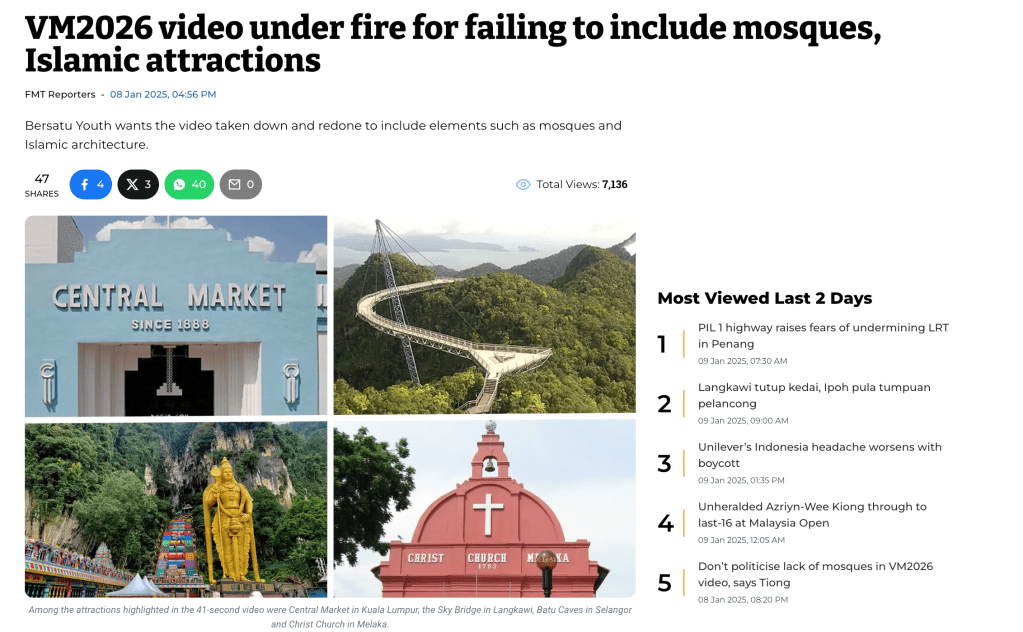









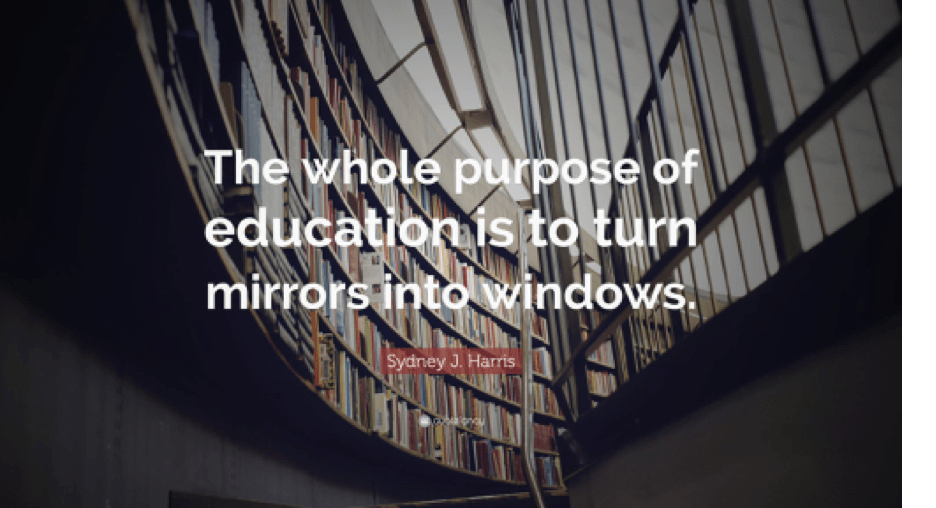

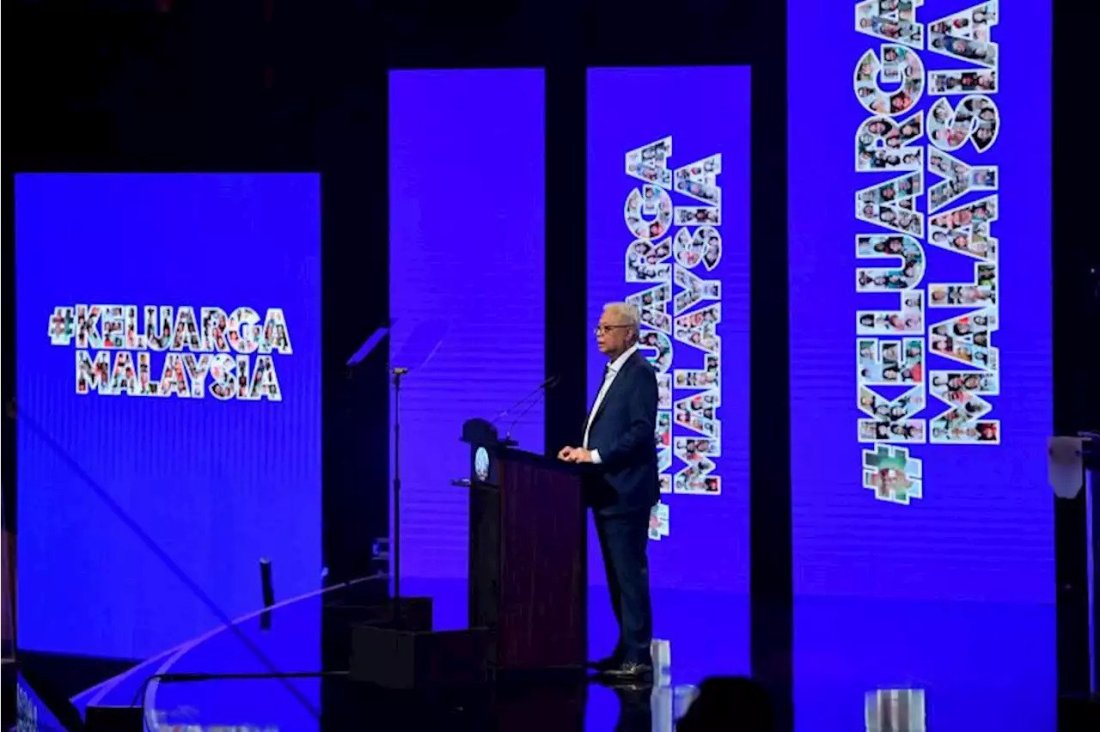

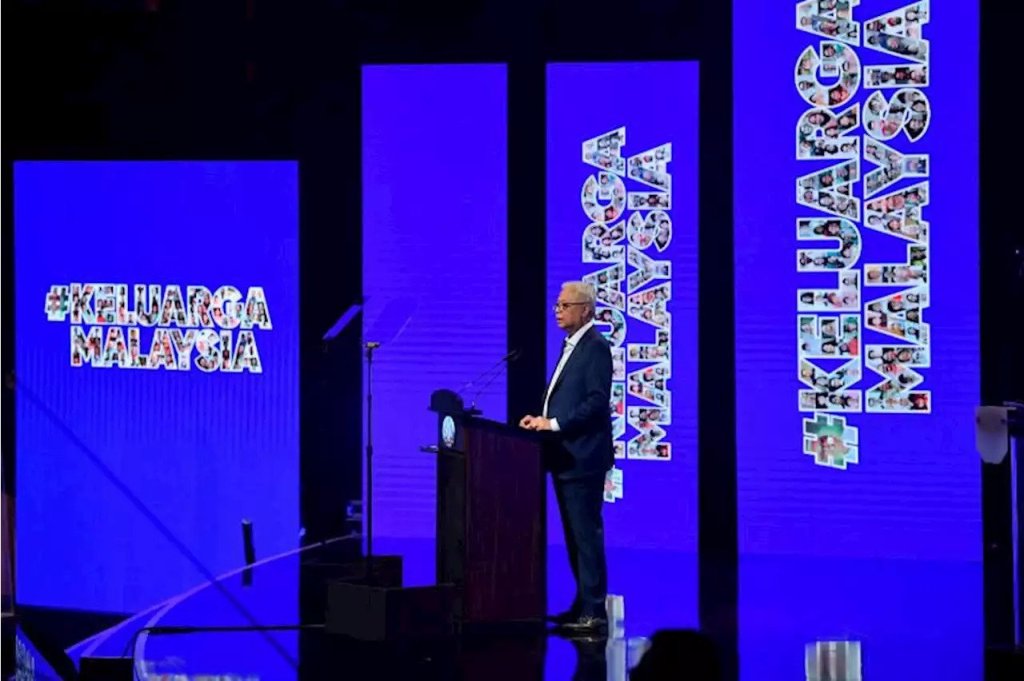

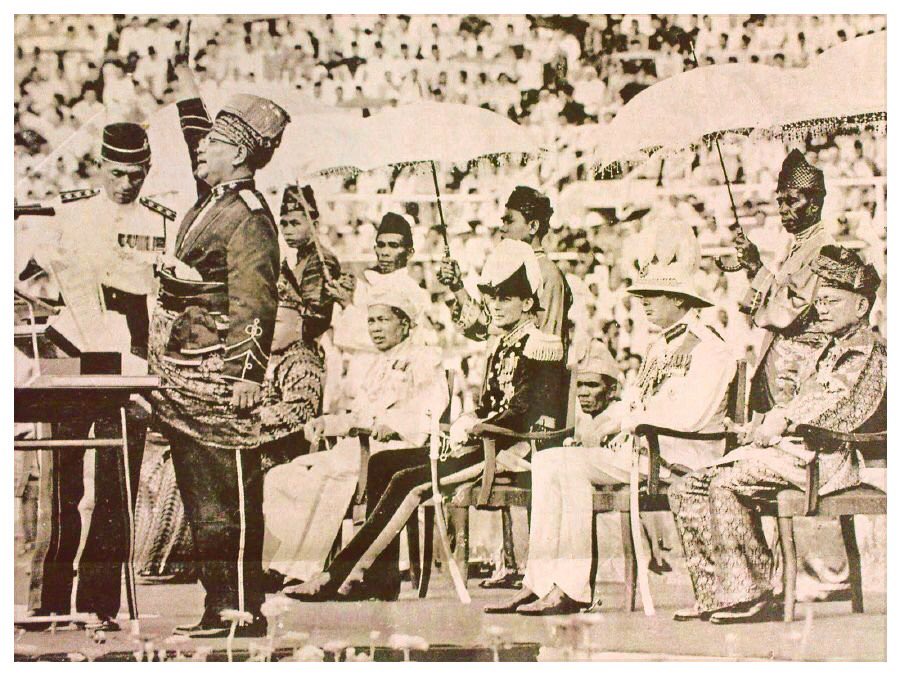
 myAsylum